Yes, you can sell an inherited house in St. Augustine, and in most cases you can sell it as is, before probate fully closes, once the personal representative has authority from the court. This guide walks through how Florida probate works for a house in St. Johns County, whether all the heirs have to sign, and how a cash sale can settle the estate without repairs or cleanouts.
Inheriting a house here is rarely simple. St. Augustine is the nation's oldest city, and inherited property in St. Johns County often means a historic home near Lincolnville, a beach condo on Anastasia Island, or family land that has been passed down for generations. The house usually comes with decades of belongings to sort, repairs nobody wants to fund, property taxes and insurance still due every month, and heirs scattered across different states. I'm Chris Moore, a U.S. Marine Corps veteran and licensed Florida real estate agent (License #SL3389080). My family run company has been helping Northeast Florida sellers as an agent since 2018 and buying houses for cash since 2022, and we've sat at a lot of estate closing tables. We are home buyers, not attorneys, so nothing on this page is legal advice, but here is how the process actually works for families like yours.
How Does Florida Probate Work When There's a House in the Estate?
Probate is the court process that moves property from the person who passed away to the people who inherit it. In St. Johns County, the case is filed with the Clerk of the Circuit Court in St. Augustine, and the probate file is handled through the Seventh Judicial Circuit. Until the court acts, nobody has clear authority to sign a deed, which is why the house usually cannot close the week after a loved one passes, even when every heir agrees.
What does the personal representative actually do?
Florida calls the executor a personal representative, or PR. The will usually names one, and if there is no will the court appoints someone, often the closest family member. In a formal administration, the court issues a document called Letters of Administration. That paper is what gives the PR legal authority to act for the estate: open an estate bank account, deal with creditors, and, with proper authority, sign a contract and deed to sell the house. Title companies will ask to see the Letters before they insure a sale, so getting them is one of the first real milestones.
Summary administration vs formal administration
Florida has two main probate tracks, and which one applies changes your timeline quite a bit.
- Summary administration is the shorter track, generally available when the estate's non exempt assets are worth $75,000 or less, or when the person passed away more than two years ago. There is no PR appointed. Instead the court signs an order distributing the property directly to the heirs. It often wraps up in roughly one to three months.
- Formal administration is the full process, with a PR, Letters of Administration, a creditor notice period, and a final accounting. Florida generally requires an attorney for formal administration. A smooth case commonly takes six months to a year. Disagreements between heirs, hard to find beneficiaries, or creditor issues can stretch it longer.
One wrinkle worth knowing: a Florida homestead, meaning the home the person actually lived in, gets special treatment. It often passes to heirs with strong protection from most creditor claims, but the court still typically needs to enter an order confirming its homestead status before title is clean. A local probate attorney handles that step, and we coordinate our closing timeline around it.
Do All Heirs Have to Agree or Sign the Deed to Sell?
This is the question we hear most from St. Augustine families, and the honest answer is that it depends on where the property sits in the process.
While the house is still in the estate, the PR is generally the one who signs. If the will grants the power of sale, or the court authorizes the sale, the PR can typically sign the contract and deed on behalf of the estate without collecting a signature from every heir. Heirs still get notice and can object through the court, but day to day, one person runs the sale.
After the deed passes to the heirs, everything changes. If three siblings each inherit a one third interest, all three owners have to sign the deed at closing. One sibling cannot sell the whole house alone. If someone flat refuses, Florida law does allow a partition lawsuit that can force a sale, but partition is slow and expensive and usually leaves less money for everyone. In our experience, most families get there faster with one clear cash number, one closing date, and proceeds split by the title company exactly according to each heir's share. We routinely close with heirs signing from three or four different states using mobile notaries, so nobody has to fly to Florida.
Can You Sell the House As Is, During or After Probate?
Yes on both counts. Florida has no rule that says an inherited house must be repaired, updated, or emptied before it sells. And you usually do not have to wait for the probate case to fully close. Once the PR has authority, the house can go under contract, and the title company works from the court file so the closing and the probate case line up. If the estate needs the sale proceeds to pay estate expenses, selling during probate is often the point.
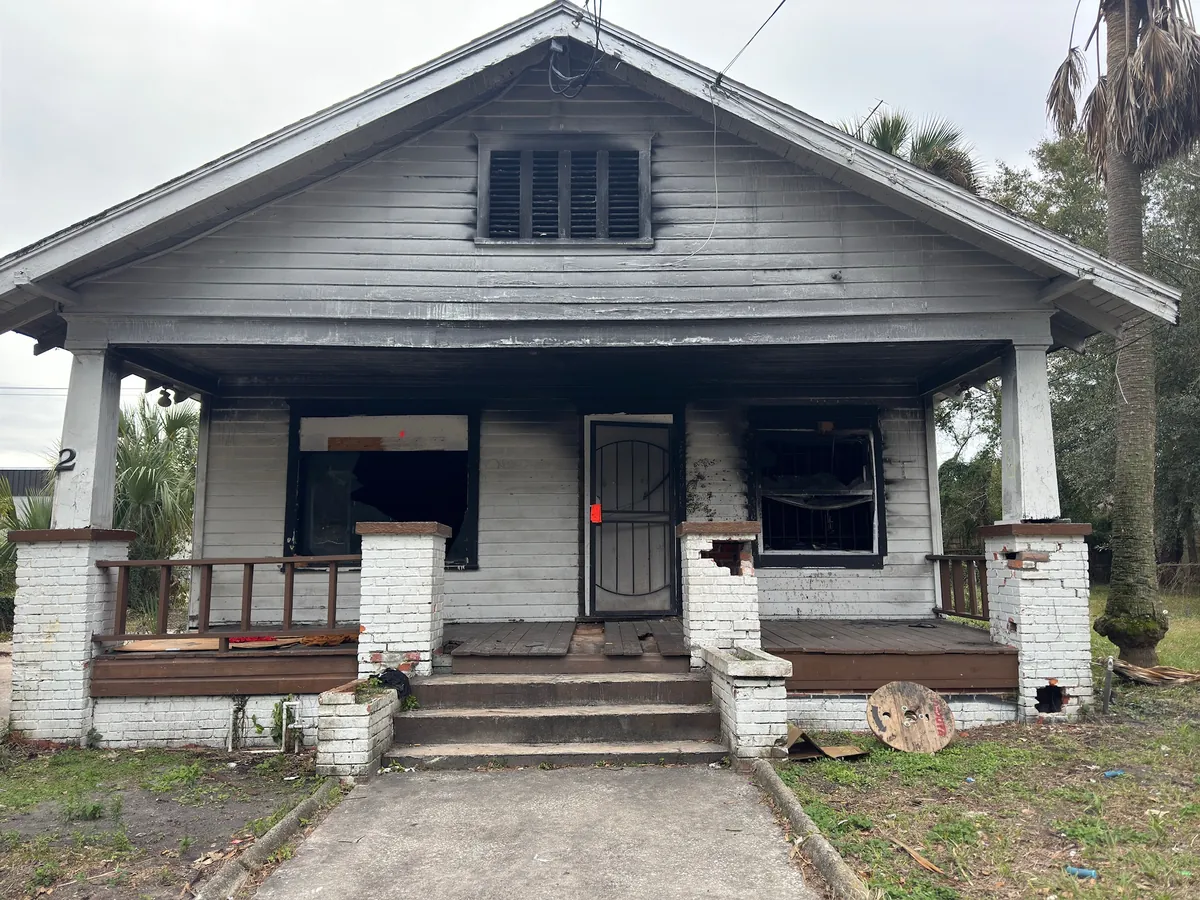
Selling as is matters more for estate homes than almost any other kind of sale. The big national instant offer companies usually will not touch dated or distressed estate properties. They want move in ready homes. We specialize in exactly the houses they turn down: a 1960s block home in West Augustine that still has the original kitchen, a Davis Shores house with old storm damage, a World Golf Village home that has sat vacant while the family sorted things out. You take the photo albums and the things that matter, and you leave everything else, furniture, clothes, the garage full of tools. We handle the cleanout after closing.
What Is Stepped Up Basis, in Plain Terms?
Here is a piece of good news most heirs do not expect. When you inherit a property, the tax basis generally resets, or steps up, to the home's market value on the date the owner passed away. In plain terms: if your parents bought the house near the beach in 1985 for $70,000 and it was worth $400,000 when they passed, your starting point for capital gains is roughly $400,000, not $70,000. Sell it near that value soon after, and the taxable gain is often small or nothing at all. That is why many heirs owe little or no capital gains tax on an inherited sale, even on a home that grew enormously in value. Every situation is different, so run your numbers past a CPA, but do not assume a big tax bill is waiting. Often it is not.
What Is a Lady Bird Deed, and Can It Avoid Probate Next Time?
If you are going through probate right now, you may be wondering how to spare your own kids the same process. Florida is one of a handful of states that recognizes the enhanced life estate deed, commonly called a Lady Bird deed. The owner keeps full control of the home for life, including the right to sell or mortgage it, and when they pass, the property transfers automatically to the people named on the deed, with no probate needed for that house. It is a popular planning tool here in Northeast Florida precisely because it is simple and it preserves the stepped up basis. It has to be drafted correctly, so this is a conversation for an estate planning attorney, but it is worth asking about once the current estate is settled.
Why Out of Town Heirs Choose a Cash Sale
Roughly half of the inherited houses we buy belong to heirs who do not live in Florida at all. Managing a vacant St. Augustine property from Atlanta or New Jersey means paying taxes, insurance, utilities, and lawn service every month, worrying about hurricane season and vacant home insurance rules, and trying to coordinate contractors and estate sale companies from a distance. A listed sale adds months of showings, inspection repair requests, and buyer financing that can fall through. A direct cash sale removes all of it:
- No repairs, no matter the roof, the plumbing, or the storm damage.
- No cleanout. Take what matters and leave the rest to us.
- No showings, open houses, or strangers walking through a parent's home.
- No commissions or seller fees, and no financing contingency that can collapse a week before closing.
- A closing date the family picks, fast once the estate has authority, or later if probate needs time.
We buy across Duval, Clay, St. Johns, Baker, and Putnam counties, we hold a 5.0 rating across roughly 164 reviews, and you can look us up on the Better Business Bureau before you ever call.
St. Augustine Areas We Buy In
We know St. Augustine block by block, including Lincolnville, Davis Shores, Anastasia Island, West Augustine, St. Augustine Shores, and World Golf Village, with inherited homes across ZIP codes 32080, 32084, 32086, 32092, and 32095.
- Lincolnville
- Davis Shores
- Anastasia Island
- World Golf Village
How It Works
- Call or text the address to 904-606-9163. Tell us it's an inherited St. Augustine home and where the estate stands.
- We review the property and the probate situation, then explain a clear cash offer and how we got to the number.
- You and any co-heirs pick the closing date. Fast, or once the estate has authority to sell.
- We close at a Florida title company; the estate or the heirs get paid, with no commissions or fees.
Frequently Asked Questions
Do all siblings have to agree to sell an inherited house in Florida?
It depends on how title passed. If the house went through probate and the court gave the personal representative authority to sell, one person can often sign for the estate. If the deed already passed to the siblings so each owns a share, then every owner generally has to sign the deed at closing. When one heir refuses, Florida law allows a partition action, but most families avoid that cost by agreeing on one clean sale. We are not attorneys and this is not legal advice, but we work with multiple heirs in different states all the time and keep everyone on the same page.
Can the executor sell a house without all heirs signing?
Often yes, while the property is still in the estate. In Florida a personal representative with court authority, either in the will or from the probate judge, can typically sign the sale documents on behalf of the estate. Once probate is finished and the deed is in the heirs' names, the personal representative no longer controls it and each owner has to sign. Every estate is different, so confirm your situation with the estate's attorney.
How long does probate take in St. Johns County before you can sell?
Summary administration, for smaller or older estates, often wraps up in roughly one to three months. Formal administration commonly runs six months to a year, sometimes longer if the estate is complicated or heirs disagree. The good news is you usually do not have to wait for probate to fully close. Once the personal representative has authority, the house can go under contract and often close during the process, with the title company coordinating with the court file.
Can I sell an inherited house as-is?
Yes. Florida does not require you to repair, update, or even empty an inherited house before selling it. We buy inherited St. Augustine homes exactly as they sit, including houses full of belongings, dated kitchens, old roofs, and storm or water damage. Take the keepsakes that matter and leave everything else. There are no repairs, no cleanouts, no staging, and no showings.
Ready for a Number on the St. Augustine Home?
Get a no-obligation cash offer for the inherited property. Call or text 904-606-9163, or send the address through the form. You can also read our statewide selling an inherited house in Florida guide, the St. Johns County inherited house page, or see how we buy houses in St. Augustine.