
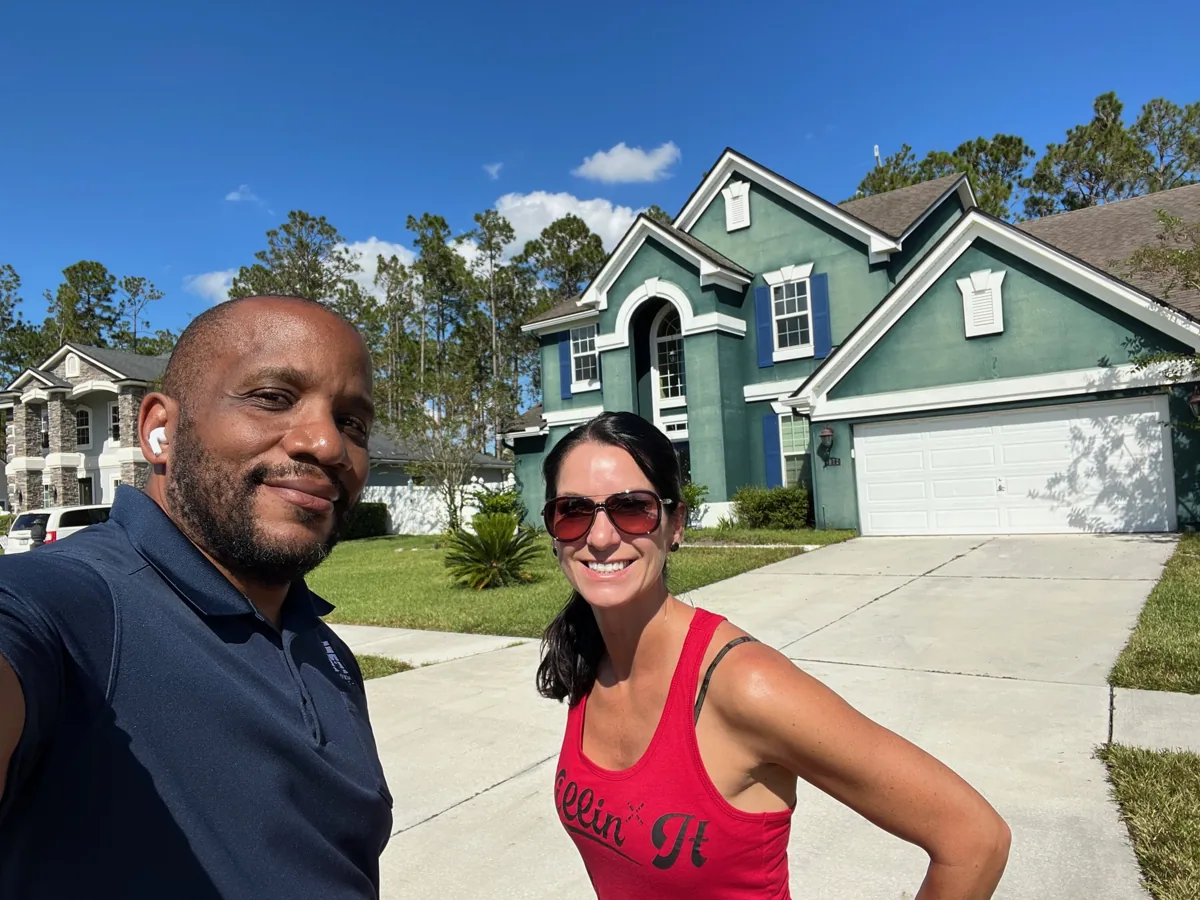
When a parent dies in Florida and the house is still in their name, nobody can sell it until a court says who has the authority to sign. That is what probate is. It is slower than people expect, it usually needs a lawyer, and the house keeps costing money the whole time. But it is not a trap. Most estate houses I see in Duval, Clay and Nassau close fine once the family understands three things: which kind of probate they are in, whether the house was homestead, and who is actually allowed to sign the deed. This covers all of it, plus the mortgage, the taxes, the belongings, and when to list instead of taking my offer.
- Being named in the will does not let you sell the house. The court has to act first. Until then, no deed.
- Summary administration is the short road. It is available when the estate going through court, not counting protected homestead, is $75,000 or less, or the person has been gone more than two years.
- A personal representative can only sell without a court order if the will says so. No will, or no power of sale, means the judge signs off first.
- Mom's homestead was never the estate's to sell. It passes straight to the heirs. That changes who signs.
- The bank cannot call the loan because you inherited the house. Federal law protects you, and the servicer has to talk to you.
- You probably owe far less tax than you fear. Basis resets to the value on the day of death. You only pay on gain after that.
01. What probate is, and why the deed matters more than the will
Here is the sentence I say more than any other on these calls: the will tells everyone what your mother wanted. The deed tells the title company who owns the house. Only one of those lets a house get sold.
If the deed says your mother owned the house alone, her name stayed on it when she died. A will does not move title. Probate does: a judge in the county where she lived confirms the will, appoints a person to act for the estate, and that person eventually signs a deed. Or, if the house was her homestead, the court enters an order saying it passed to her heirs the moment she died, and the heirs sign.
The Duval County Clerk puts it plainly on its probate page: assets are collected, creditors are paid, and whatever is left goes to the heirs, with the court checking the will and supervising. In Duval, Clay and Nassau counties those cases run through the Fourth Judicial Circuit. The Duval probate department is at 501 West Adams Street, Room 1260, in Jacksonville.
Two things people do not know. Whoever holds the original will must deposit it with the clerk within 10 days after learning of the death under Florida Statute 732.901. And under Florida Probate Rule 5.030, a personal representative must be represented by a Florida attorney unless they are the only interested person. Budget for the lawyer.
Until the court has acted, nobody has authority to sign a listing agreement, a contract, or a deed. I can walk the house and hand you a written offer so you know what you are working with. But nobody can buy it until the paperwork catches up. Anyone who says otherwise is trying to tie the house up before the family knows what it is worth.
02. Formal versus summary administration
Florida has two main kinds of probate, and which one you are in changes the timeline, the cost, and who signs the deed.
| Summary administration | Formal administration | |
|---|---|---|
| When it is available | The estate subject to administration in Florida, less property exempt from creditors such as protected homestead, is $75,000 or less. Or the person has been dead more than 2 years. Florida Statute 735.201. | Everything else, or when the will itself directs it. |
| Who is appointed | Nobody. The court orders the assets distributed directly to the people entitled to them. | A personal representative, who receives letters of administration. |
| Who signs the deed | The heirs or beneficiaries named in the order. | The personal representative, with or without a court order depending on the will. |
| Duval clerk filing fee | $346 for estates valued at $1,000 or more | $401 |
| Typical feel | Faster and cheaper. Common when the house was homestead. | Slower. A creditor period has to run. More attorney time. |
That $75,000 line surprises people. A $240,000 homestead in Arlington does not count toward it. A $240,000 rental does.
The two year rule matters too. Florida Statute 733.710 says that two years after death, the estate and the beneficiaries are no longer liable for claims against the person who died, except that a recorded mortgage or lien stays fully enforceable. So if Dad died in 2023 and nobody opened a probate, the credit card companies are barred. The mortgage company never was, and if the payments stopped, that house may be closer to foreclosure than anyone realizes.
The creditor clock in formal administration
In a formal case the personal representative publishes a notice to creditors. Under Florida Statute 733.702, a claim is barred unless filed within 3 months after first publication, or 30 days after a creditor who had to be served was served, whichever is later. That window is why a formal estate often cannot pay sale proceeds to the family right away. Tell your siblings early: the sale can close in week six and the check may not come until month five.
03. Who is allowed to sign: the personal representative and Florida Statute 733.613
Once the court appoints a personal representative and issues letters of administration, that person has authority over the estate's assets. But letters by themselves do not automatically let the personal representative sign a contract and walk into closing. What they can do with real property depends on the will. Florida Statute 733.613 has two parts.
- If the will gives a power of sale. When the will confers a specific power to sell or mortgage real property, or a general power to sell any estate asset, the personal representative may sell without court authorization or confirmation. The statute says the sale need not be justified by any showing of necessity. Most attorney drafted wills include this.
- If there is no will, or the will has no power of sale. The personal representative may still sell if it is in the estate's best interest, but the statute is blunt: no title passes until the court authorizes or confirms the sale. That means a petition, notice to interested people, and a judge's order before the deed is good. A contract signed before that is subject to court approval, and a good probate attorney writes it that way and files the petition right away. The bad version is when nobody checks, the title company reads the will the week before closing, and everything stops.
One more piece of 733.613 that helps you close clean. Under subsection (3), when a sale happens under a specific power of sale or a court order, the buyer takes title free of claims by the estate's creditors and free of the beneficiaries' entitlements. Existing mortgages and recorded liens are the exception and get paid at closing. That is what lets a title company insure an estate sale, and why I want the letters, the will, and any order before we set a date. If the house was the primary residence, I also want the order determining homestead, because that changes who signs.
04. Homestead passes outside probate, and what that means for heirs
If the house was your parent's primary residence, Florida treats it differently from everything else they owned, and almost nobody knows it.
Florida Statute 733.608 says that all of the decedent's real and personal property becomes an asset in the personal representative's hands for paying claims and expenses, except the protected homestead. The homestead is not the estate's asset. The personal representative cannot use it to pay Mom's credit cards and generally does not sell it. It passed to the heirs the moment she died, and the court enters an order confirming that and naming who took it.
Who takes it depends on the family. Under Florida Statute 732.4015, a person survived by a spouse or a minor child cannot will the homestead to anyone else, except to the spouse when there is no minor child. Under 732.401, if the homestead is not validly devised and there is a surviving spouse and descendants, the spouse takes a life estate and the descendants take the remainder. The spouse can instead elect, within 6 months of the death, to take an undivided one half interest as a tenant in common, and that election is irrevocable. None of this applies to property the couple owned as tenants by the entireties or as joint tenants with right of survivorship, which passes to the survivor automatically.
At the closing table that means:
- The signers are the heirs, not the estate. Three kids means three signatures. If one lives in Oregon, the schedule stretches.
- A surviving stepparent with a life estate can stall a sale for years. The life tenant can live there for life, the remainder heirs own the future, and neither can sell the whole house alone. I have seen this deadlock in Orange Park and Mandarin. The clean fixes are agreement or the 6 month election.
- The personal representative can still protect the house. Under 733.608(2), if a homestead appears unoccupied, the personal representative may take possession to preserve and insure it, and gets a lien for what they spend that is repaid from the sale. So the estate often fronts the insurance and the yard.
Unsecured debts generally cannot force a sale of homestead. Recorded liens are different. A mortgage, a tax certificate, an HOA lien or a recorded code enforcement lien stays on the house and gets paid at closing. My tax deed and code enforcement page and HOA foreclosure rights page cover those.
05. Lady Bird deeds and how they skip probate
Every few weeks someone tells me "Dad did a Lady Bird deed, so we do not need probate for the house." Usually they are right. Sometimes they are wrong in a way that costs months.
A Lady Bird deed, which lawyers call an enhanced life estate deed, is signed and recorded while the owner is alive. It keeps a life estate for the owner and names who gets the house at death. The "enhanced" part is that the owner keeps the power to sell, mortgage or change their mind without asking anyone. At death the beneficiaries record a death certificate and title is in their names. No probate for that asset.
To be straight about what I can verify: no Florida statute defines a Lady Bird deed by name. It grew out of practice, and in my experience title companies in Northeast Florida handle them routinely. What the statutes do address is homestead. Florida Statute 732.4017 says a lifetime transfer of homestead is not a devise, and does not descend under 732.401, when the owner does not keep a power to revoke or take the property back. A Lady Bird deed keeps exactly that power. So if the owner leaves a surviving spouse or a minor child, the homestead devise restrictions in 732.4015 can still come into play and the deed may not do what the family expects. That is an attorney question, and I ask the family to put it to their lawyer before I write anything.
The other failure point is simpler. The deed has to be signed correctly, recorded in the right county, and the beneficiaries have to be alive. I have seen one that named a son who died before the father, and until a lawyer read it nobody knew who signed. If the deed is clean, this is the estate situation where I can move fastest, which is why I tell every parent I meet to ask an estate attorney about it while they are healthy.
06. Multiple heirs who disagree
Three siblings inherit a house. One wants to sell now. One wants to rent it. One wants to keep it because selling Mom's house feels like a betrayal. None of those can happen without the other two.
First, the legal floor. Once the heirs hold title together, any one of them can file a partition action under Chapter 64 of the Florida Statutes. Section 64.011 puts those actions in chancery, meaning circuit court. With a house that cannot be physically divided, that typically ends in a court ordered sale with the proceeds split after both sides' lawyers are paid. Nobody wins a partition case. Know it exists so you do not use it.
Second, the money floor. A house being argued over costs money every month. Insurance on a vacant Florida house is expensive and hard to get, which I covered in the insurance crisis piece, and the tax bill comes November 1. If the family cannot agree on a plan, at least agree in writing on who fronts those costs and how they get paid back at closing.
Third, the conversation that works. I ask each heir privately: what is the number that makes this feel fair to you? Not what the house is worth. The number that lets you stop thinking about it. Then I show the math on both paths, and usually two of the three realize the gap is smaller than a year of carrying costs. The sibling who wants to keep it can often buy the others out, and Sean Bailey on my team can say in fifteen minutes whether that is realistic.
What does not work is one sibling signing with a cash buyer before the others agree. Without every required signature the deed is worthless. I will not write a contract on an estate house until I know who has to sign and that they are all willing. That has cost me deals and I am fine with it.
07. The mortgage on an inherited house
Most people assume that when the borrower dies, the bank can demand the whole balance. For a family home, that is almost always wrong.
| Question | Answer | Where it comes from |
|---|---|---|
| Can the lender call the loan because a relative inherited? | No. On residential property with fewer than five units, a lender may not enforce a due on sale clause on a transfer to a relative because of the borrower's death, or to the spouse or children. | Garn St Germain Act, 12 U.S.C. 1701j-3(d) |
| Does the servicer have to talk to me if I am not on the loan? | Yes. Once it learns of the death, the servicer must promptly communicate with potential successors in interest, tell you what documents it needs, and confirm you or say why not. A confirmed successor is treated as the borrower. | 12 C.F.R. 1024.38(b)(1)(vi) and 1024.30(d) |
| Who is a successor in interest? | Someone who received an ownership interest by devise or descent, by transfer to a relative because of the borrower's death, or as the borrower's spouse or child, among others. | 12 C.F.R. 1024.31 |
| Do these rules apply to every loan? | No. Small servicers and reverse mortgages are exempt from the successor provisions. The Garn St Germain protection still applies to a regular mortgage regardless of servicer size. | 12 C.F.R. 1024.30(b) |
| Can the lender foreclose while probate is open? | Yes. Probate's creditor deadlines do not stop a mortgage foreclosure. Federal rules generally require more than 120 days of delinquency before the first filing. | Florida Statute 733.702(4)(a); 12 C.F.R. 1024.41(f) |
How to use that: the week after the funeral, one person calls the servicer, reports the death, and asks what documents it needs to confirm a successor in interest and what the payoff is. Keep the payment current if there is any way, even if the siblings split it, because a foreclosure runs on its own clock no matter how probate is going.
If the payments already stopped months ago, the house may be behind before the family has authority to sell it. That is solvable, but it needs both tracks at once: the probate attorney moving on authority, and someone working the servicer on loss mitigation. My stop foreclosure page covers what to say. If the balance is bigger than the house is worth, on my team handles short sales, and an estate can do one. Reverse mortgages are different: the successor rules above do not apply, so get that timeline from HUD or the servicer in writing.
08. The tax question everyone fears, and the step up in basis
The fear: Mom bought the house in Murray Hill in 1989 for $48,000. It is worth $260,000 now. Do we pay capital gains tax on $212,000?
No. Under Internal Revenue Code section 1014, the basis of property you receive from a decedent is its fair market value on the date of death, or the alternate valuation date if the estate elects one. The gain that built up during Mom's life goes away for income tax purposes. That is the step up in basis. Under section 1223(9), inherited property sold within a year of death is still treated as held more than a year, so any gain is long term.
Now the qualifier too many articles skip. The step up covers appreciation that happened before death. Anything the house gains between the date of death and the sale is still taxable. If Mom died in March when the house was worth $260,000 and you sell in November for $275,000, the taxable piece is the $15,000 spread minus selling costs. Sell for less than the date of death value and you may have a loss. That is why you want a written value as of the date of death, an appraisal or at least a broker's opinion with comparable sales from that month. I do those at no charge whether or not the family sells to me. I am not a tax professional and this is not tax advice. Talk to a CPA, especially if an estate tax return is involved, because section 1014(f) ties your basis to the value on that return.
What that looks like with real numbers
Three siblings inherit their mother's homestead on the Southside. These are illustrative figures, not a specific client. Date of death value, $260,000. Mortgage balance, $61,000. It needs a roof, the kitchen is original, and the garage holds forty years of belongings.
| Line | List it after repairs | Sell to me as is |
|---|---|---|
| Repairs before sale (roof, kitchen, paint, cleanout) | $38,000 out of pocket, up front | $0 |
| Months to closing once authority exists | About 5 (repairs, then 60 to 90 days on market) | About 1 |
| Carrying costs while waiting (mortgage, insurance, taxes, utilities) | About $2,400 a month, so about $12,000 | About $2,400 |
| Sale price | $305,000 after repairs | $213,000 as is |
| Commission and seller closing costs at roughly 8 percent | About $24,400 | $0, I pay closing costs |
| Mortgage payoff | $61,000 | $61,000 |
| Net to the estate | About $169,600 | About $149,600 |
Listing wins by about $20,000, which is real money and I will never pretend otherwise. But look at what it took: $38,000 of cash up front, five months of coordination, and three people agreeing on a contractor. If they have the cash and the patience, they should list, and I will happily be the agent. If one is in Oregon, one is fighting with the other two, and the roof is leaking onto the belongings, the $20,000 is buying certainty, and a lot of families decide that is a fair trade.
On taxes: basis is $260,000, the listing path's $38,000 of improvements add to it, so that gain is near zero after selling costs, and the cash path is a loss. Nobody in that example writes a big check to the IRS. Run your own numbers on the cash offer versus listing calculator.
09. The house full of belongings, what I actually do, and when you should list instead
The belongings are the part nobody warns you about. A house someone lived in for thirty years is photographs, furniture, paperwork, and a garage nobody has opened since 2011. For a family out of state, every trip to clear it is a plane ticket and a day spent crying in a closet. It is the reason a lot of estate houses sit vacant for a year.
What I actually do when I buy an estate house
- Take what you want and leave the rest. I buy the house with everything in it. The family takes the photographs and the things that matter, and I handle the cleanout after closing. That is the most common reason a family chooses me.
- Buy as is. No repairs, no inspection contingency that turns into a renegotiation, no lender requiring a new roof. My number does not change unless something turns up in title.
- Close on the estate's timeline. If the court order is six weeks out, I wait. If the sale needs court approval, my contract says so. Need thirty extra days for the belongings? You have them.
- Pull title early. I order it the day the contract is signed so any lien or heir problem surfaces in week one.
- Show you the math. I start from what the house will sell for after I renovate it, subtract the renovation, six months of interest and carrying, my closing costs on both ends, and the margin I need for the risk. What is left is what I can pay. On a house that needs real work that is 45 to 65 percent of the finished value. On a house that needs paint and a cleanout, closer to 70. I make my money when it resells.
When you should list instead
I am a licensed Florida real estate agent as well as a buyer, so I lose nothing by telling you this. List the house when it is in decent shape or the family has the cash to make it so, the heirs agree, nobody is in a hurry, and the goal is the highest number. A retail buyer will pay more than I will, every time, and section 08 shows it. I can list it for you, or use any agent you trust. Just run both columns first so the decision is made on numbers and not on exhaustion.
Sell for cash when time, condition, distance or family friction is the real problem. A roof no insurer will write. A partition threat. A servicer close to filing. A house you cannot face clearing. That is where certainty is worth more than the last $20,000, and I would rather say so on the phone than win a deal that was wrong for you. The cash offer form takes two minutes and I will call back with a real figure. There is more on my Duval County probate house sale page and my selling an inherited house in Jacksonville guide.
10. Questions people ask me
Can we sell the house before probate is finished?
Often, yes. What matters is whether the person signing has authority, not whether the case is closed. In formal administration that is the personal representative, under a power of sale in the will or a court order under Florida Statute 733.613. In summary administration or a homestead situation, it is the heirs named in the order. Proceeds may be held until the creditor period runs.
Do we really need a lawyer for probate in Florida?
For formal administration, almost always. Florida Probate Rule 5.030 requires a personal representative to be represented by a Florida attorney unless they are the only interested person, and the Duval County Clerk says so on its probate page. With a house involved, I have never seen a family do well without one.
The house was Mom's homestead. Can her debts touch it?
Unsecured debts like credit cards generally cannot force a sale of protected homestead, and under Florida Statute 733.608 the homestead is not an estate asset available to pay those claims. Recorded liens are different. A mortgage, property taxes, an HOA lien or a code enforcement lien stays on the house and gets paid from the sale.
My stepfather has a life estate in the house. Can we sell?
Not without him. Under Florida Statute 732.401, when homestead passes to a surviving spouse and descendants, the spouse takes a life estate and the descendants take the remainder unless the spouse elects, within 6 months, to take one half as a tenant in common. Selling the whole house needs everyone to sign. Get an estate attorney in the room.
Will the bank call the mortgage due now that Dad is gone?
On a family home with fewer than five units, no. The Garn St Germain Act at 12 U.S.C. 1701j-3(d) bars a lender from enforcing a due on sale clause on a transfer to a relative because of the borrower's death or to the spouse or children. Keep the payments current, because the lender can still foreclose on a defaulted loan.
How much tax will we owe when we sell?
Usually far less than people fear. Under IRC section 1014 your basis is the fair market value on the date of death, so appreciation during your parent's life is not taxed to you. You owe tax only on gain after the date of death, net of selling costs and improvements, and it is long term under section 1223(9). Get a written date of death value and talk to a CPA.
Nobody opened a probate and Dad died three years ago. Is it too late?
No, and in one way it is easier. Florida Statute 735.201 allows summary administration for any estate where the person has been dead more than 2 years regardless of value, and 733.710 bars most creditor claims after 2 years. A recorded mortgage or lien is the exception. If the payments stopped when Dad died, deal with the servicer first.
Where these numbers come from
- Florida Statutes (2025): 735.201, 733.613, 733.608, 732.401, 732.4015, 732.4017, 733.702, 733.710, 732.901 and 64.011, retrieved from flsenate.gov in September 2026.
- Duval County Clerk of Courts, Probate Department page: filing fees, Florida Probate Rule 5.030 attorney requirement, office address. Retrieved September 2026.
- Fourth Judicial Circuit of Florida (jud4.org): the circuit serves Clay, Duval and Nassau counties. Retrieved September 2026.
- 12 U.S.C. 1701j-3(d) (Garn St Germain Depository Institutions Act), Office of the Law Revision Counsel, text in effect September 20, 2026.
- 12 C.F.R. 1024.30, 1024.31, 1024.38 and 1024.41(f) (CFPB Regulation X mortgage servicing), eCFR, current as of September 2026.
- 26 U.S.C. 1014 and 1223(9), Legal Information Institute. The worked example in section 08 is illustrative.
A plain note: I am a Florida home buyer and a licensed real estate agent, not an attorney, an accountant or a financial advisor. This is general information, not advice for your particular situation. Probate is fact specific, every estate turns on its own documents, and the rules have exceptions I have not covered. Statutory references reflect Florida and federal law as I understand it in September 2026. Please confirm the specifics for your own circumstances with a licensed Florida probate attorney, and talk to a CPA before you rely on anything I said about taxes.