
1. The San Mateo Walkthrough: First Impressions on a Humid Florida Afternoon
Driving down US Highway 17 south from East Palatka into San Mateo is one of those peaceful North Florida drives where the Spanish moss hangs heavy from live oaks and the pace of life noticeably slows down. San Mateo is a quiet unincorporated community in Putnam County, sitting just east of the St. Johns River. It is known for citrus groves in its early history, quiet residential roads, and homes set on large, sprawling acreage. On this particular afternoon, the Florida humidity was thick in the air, and I was driving down to perform a comprehensive physical walkthrough on a home we recently placed under contract.
The family reached out to us directly through our website at We Buy Any House In Florida. They were dealing with an inherited property going through the Florida probate process. Like many families in this situation, the heirs lived out of the area and wanted an honest, straightforward assessment of what the home was worth in its true as-is condition. They did not want to sink tens of thousands of dollars into repairs, manage general contractors from hours away, or navigate traditional bank financing inspections.
My business partner Andrew could not make the trip down with me on this day, so my mission was to capture every single detail on site for our team. I spent the afternoon recording comprehensive video walkthroughs, flying our drone to inspect the roof lines and surrounding canopy, taking detailed interior and exterior measurements for a full CAD floor plan, and photographing every potential defect.
For my inspection photos, I still rely on my older Sony A99 camera that I have had for roughly fifteen years. While modern smartphones take good pictures, this older camera body has dedicated GPS hardware built right into it. When I walk a rural acreage parcel in Putnam County, every photo I snap is permanently geotagged with exact satellite coordinates. That means when we sit down at the computer later to cross-reference foundation settlement points, roof valleys, and property boundary lines against the Putnam County Property Appraiser GIS maps, we know with mathematical certainty exactly where each defect sits on the lot.
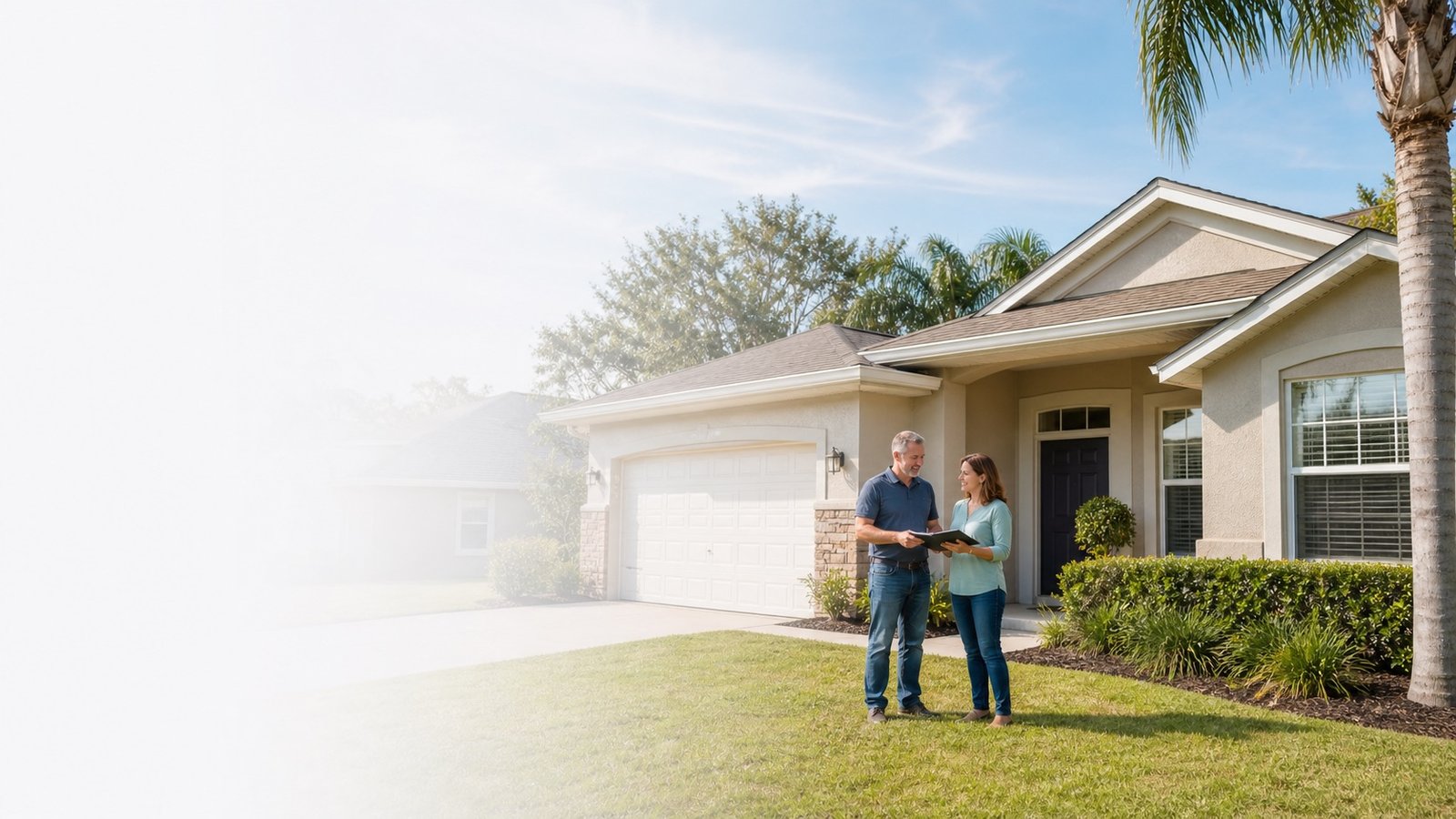
From the curb, the property looks promising. It sits on a spacious, oversized lot with mature shade trees, a convenient circular driveway, an attached carport, and a massive backyard offering plenty of room for family gatherings, gardening, or boat and RV storage. Off the side of the carport, there is a large exterior storage shed and workshop area. The home has great bones and undeniable curb appeal at first glance, but as anyone who buys distressed or inherited real estate in Florida knows, the real story of a property is never told from the curb.
2. The Three Bedroom Dilemma: When Past Renovations Create Functional Obsolescence
On the official Putnam County property tax roll, this home is officially classified as a three-bedroom, two-bathroom single-family residence. When a buyer or investor pulls up public records, they see a standard three-two configuration that typically appeals to the largest demographic of retail homebuyers in North Florida. But as soon as you step through the interior doorways with a measuring tape, you discover that reality does not match the paperwork.
Roughly eight to ten years ago, the previous owner made a well-intentioned modification to the home. The owner had an aging mother who needed specialized care and accessibility. To make life easier for her, the family decided to dramatically expand the rear master bathroom. They built out a large, handicap-accessible walk-in shower, expanded the vanity area, and created a spacious, open bathroom floor plan.
There was only one problem: rather than building an exterior addition onto the home, they carved out the space directly from the adjoining rear bedroom.
When you walk into that rear bedroom today, it feels less like a bedroom and more like an oversized walk-in closet or a utility room. The usable living footprint was cut down so drastically that fitting a standard queen-size bed, nightstands, and a dresser is virtually impossible. In real estate appraisal terminology, this is a textbook example of functional obsolescence. Functional obsolescence occurs when a property suffers a loss in utility, desirability, or value due to an inherent design flaw, outdated feature, or awkward layout that cannot easily satisfy modern consumer expectations.
This presents a serious challenge for our renovation scope. If we leave the layout as it currently sits, retail buyers walking through during an open house will immediately cross the house off their list. A family shopping for a three-bedroom home expecting space for children or visiting relatives cannot use that back room as a functional bedroom.
That leaves our team with two distinct construction paths:
Path A is to have Andrew bring in our framing crew, deconstruct the expanded back bathroom, push the interior dividing wall back to its original footprint, and restore the third bedroom to its original dimensions. The downside is that you are taking a fully functional, updated bathroom and tearing it apart, which adds significant labor costs and demo waste to the budget.
Path B is to keep the enlarged bathroom intact and reconfigure the home's front living areas. Near the entrance, there is an existing formal dining area that connects to the converted garage family room. We could frame in a proper closet, install a private interior entry door, ensure code-compliant window egress, and convert that front space into a legitimate, spacious third bedroom.
3. Florida Building Code: What Actually Makes a Legal Bedroom in Putnam County
When we evaluate homes across Northeast Florida, we frequently run into rooms that homeowners or previous sellers labeled as bedrooms that fail to meet basic legal requirements under the Florida Building Code. When a property goes through probate or is being prepared for sale, misrepresenting room counts can lead to severe appraisal issues, lender financing rejections, and legal liability.
In Putnam County, residential construction and remodeling are governed by the Florida Building Code Residential Edition along with local municipal codes. Under Florida Building Code Section R304 and Section R310, a room must satisfy very specific architectural and life safety standards to be legally marketed and appraised as a habitable bedroom:
First, minimum square footage. Section R304.1 requires that every dwelling unit must have at least one habitable room with not less than 120 square feet of gross floor area. Other habitable rooms, including secondary bedrooms, must have a floor area of not less than 70 square feet. Furthermore, Section R304.2 dictates that habitable rooms cannot be less than 7 feet in any horizontal dimension. If a room has been trimmed down so that one wall measures only 6 feet across, it cannot legally be called a bedroom, regardless of what the property appraiser card says.
Second, minimum ceiling height. Section R305 requires that habitable space, hallways, and bathrooms have a ceiling height of not less than 7 feet. If a room has sloped ceilings, at least 50 percent of the required minimum floor area must maintain that 7-foot clear height.
Third, emergency escape and rescue openings. This is the life safety rule that catches most unpermitted additions and converted rooms. Under Section R310, every bedroom must have at least one operable emergency escape and rescue opening that leads directly to the exterior. For homes built or updated under modern code, the window or exterior door must provide: - A minimum net clear opening of 5.7 square feet (an opening at grade floor level can be 5.0 square feet). - A minimum net clear height of 24 inches. - A minimum net clear width of 20 inches. - A finished sill height of not more than 44 inches above the floor.
Fourth, light and ventilation. Section R303 mandates natural light through windows equal to not less than 8 percent of the room's total floor area, and natural ventilation equal to not less than 4 percent of the floor area through openable windows or doors, unless an approved mechanical ventilation and artificial lighting system is installed.
Notice that the Florida Building Code does not strictly require a closet for a room to be considered habitable space. However, traditional mortgage lenders including Fannie Mae, Freddie Mac, FHA, and VA guidelines, along with local real estate market custom, almost universally require a built-in closet before an appraiser will assign three-bedroom contributory value. If you market a two-bedroom home as a three-bedroom home on the MLS, a buyer's lender will discover the defect during the appraisal inspection, refuse the loan, and cause the transaction to collapse weeks into escrow.
4. Putnam County Real Estate Economics: Neighborhood Comps and ARV Margins
Understanding real estate values in Putnam County requires a different lens than evaluating homes in urban Jacksonville or coastal St. Johns County. Putnam County is largely rural and semi-rural, anchored by Palatka, East Palatka, Crescent City, Interlachen, and unincorporated communities like San Mateo.
When evaluating this San Mateo property, I pulled active, pending, and recently closed comparable sales within a three-mile radius over the preceding six months:
Just down the street on the corner, an un-renovated three-bedroom, two-bathroom home of roughly similar square footage was listed on the open market for $210,000. That home has been sitting on the market for an extended period without securing a contract. The reason is simple: modern retail buyers looking at older homes in this price tier either do not have the spare cash reserves required to complete major structural and cosmetic repairs, or they are using FHA or VA government-backed loans that will not approve a mortgage on a property with visible exterior cracking, unpermitted layout changes, or aging roofs.
Our target After Repair Value (ARV) for this San Mateo home once our full renovation is complete is between $250,000 and $260,000. In this rural pocket, a fully renovated three-two with modern fixtures, fresh exterior and interior paint, a stabilized foundation, clean mechanicals, and a functional bedroom layout will attract young families, retirees seeking peace near the river, or military transfers willing to commute.
To make an investment deal work at an ARV of $255,000, the financial math must be disciplined: - Target Resale Price: $255,000 - Resale Closing Costs and Commissions (roughly 7 to 8 percent): $19,000 - Holding Costs over a 5-month project (taxes, insurance, power, water, cost of capital): $8,500 - Comprehensive Renovation Budget (foundation, bedroom reconfiguration, kitchen, paint, flooring, fixtures): $45,000 - Contingency Reserve for Hidden Defects: $6,000 - Investor Return on Capital and Risk Margin: $30,000
When you subtract those projected costs and risk reserves from the final sales price, your maximum allowable acquisition price sits in the $145,000 to $150,000 range. For the heirs, receiving a clean, guaranteed cash payment in that range with zero closing costs, zero commissions, and zero repair demands is far more lucrative and stress-free than spending $50,000 out of pocket to chase a $210,000 retail listing that might sit on the market for months and fail inspection.
5. Identifying Foundation Movement: Stucco Cracks, Slab Settlement, and Sloping Floors
As I continued my physical walkthrough around the exterior perimeter of the San Mateo house, several classic indicators of structural movement caught my eye. These are the exact issues that scare away retail buyers and cause home inspectors to flag a property for specialized engineering reviews.
First, I observed vertical stair-step cracking along the exterior masonry. The home features concrete block construction with an exterior stucco finish and decorative brick accents. Near the front corner and along the side elevation, visible hairline and medium-width cracks run through the stucco joints. More concerning was a noticeable separation gap along the brick veneer transition where the original structure connects with a rear addition.
Second, down along the side wall near the exterior air conditioning compressor pad, I spotted longer horizontal cracking along the stem wall. In Florida slab-on-grade construction, horizontal cracks near the base of the slab often indicate differential settlement or soil subsidence underneath the footing.
Third, when I stepped inside to walk the interior perimeter, the physical sensation was unmistakable. As you walk into the main hallway and cross the threshold into the hall bathroom, you can feel a distinct slope in the subfloor under your feet. The floor drops slightly toward the rear exterior wall.
Why does foundation settlement happen so frequently in San Mateo and throughout Putnam County?
The answer lies in the local soil profile. Putnam County features diverse geological formations, with vast stretches of deep, well-drained fine sands classified as Astatula, Paola, and Candler soil series. While these sandy soils provide good drainage, they can become unstable when subjected to fluctuating moisture levels. During extended dry spells, sandy soils shrink and consolidate. When severe North Florida thunderstorms or tropical depressions dump inches of rain in a single afternoon, the water rapidly washes through the sand, eroding sub-base support underneath un-reinforced slab perimeters.
Furthermore, when previous owners add large trees, mature oak roots near the perimeter draw hundreds of gallons of moisture out of the ground each week, causing localized soil shrinkage right next to the foundation. When downspouts dump roof runoff directly against the foundation rather than diverting water away from the house, the concentrated water puddling softens the bearing soil, causing the footing to sink under the weight of the masonry block walls.
Fixing this issue during our renovation will require specialized foundation remediation. Depending on soil testing, our foundation contractor will likely choose between two proven methods:
Option 1 is high-density expanding polyurethane chemical foam injection. Small dime-sized holes are drilled through the concrete slab along the sunken perimeter, and a specialized expanding polymer is injected into the loose sub-base. As the foam expands under immense pressure, it compacts the sandy soil, fills subterranean voids, and gently lifts the concrete slab back toward its original level plane.
Option 2 is hydraulic steel push piering. Heavy-duty steel brackets are attached to the foundation footing, and galvanized steel pier sections are hydraulically driven deep into the earth until they reach bedrock or load-bearing strata. Once stable bearing is reached, hydraulic jacks lift the home back to level, permanently stabilizing the structure.
Addressing foundation settlement is expensive, often costing anywhere from $6,000 to $15,000 depending on linear footage and pier depth. This is precisely why retail buyers utilizing conventional bank financing walk away from these houses, and why our cash buying model provides a critical solution for sellers who cannot afford structural repairs out of pocket.
6. Room-by-Room Renovation Scope: Kitchen, Converted Garage, and Interior Finishes
Once you evaluate the major structural and layout items, the next step in putting together a comprehensive scope of work is walking through every room to determine what needs to be replaced, what can be salvaged, and what needs modern cosmetic updating.
Starting with the converted garage: In older Florida homes, enclosing an attached single-car garage to create a large family room was an extremely popular weekend project in the 1970s and 1980s. In this house, the garage was converted into a step-down family den with a wood-burning fireplace. Overall, the conversion was executed reasonably well. The walls are finished with drywall rather than cheap wood paneling, the ceiling height is consistent, and the fireplace gives the room a welcoming focal point.
However, we need to inspect the mechanical heating and air conditioning supply. When garages are converted without pull permits, contractors often fail to extend the central HVAC ductwork into the room. If a room relies solely on a small wall unit or passive airflow from adjacent rooms, it creates hot zones during summer months and will be flagged by home inspectors. We will have our licensed HVAC contractor verify duct sizing and airflow to ensure the space is fully conditioned.
Moving into the kitchen: The kitchen layout is functional and efficient, featuring solid wood cabinetry, durable laminate countertops, a dual-basin stainless steel sink, and standard appliance hookups. Rather than ripping out the existing cabinetry at a cost of $8,000 to $10,000, we plan to keep the cabinet boxes. The solid wood construction is sturdier than many modern pressboard cabinets sold in big box stores today. We will thoroughly prep, prime, and professionally spray the cabinets with a modern warm neutral finish, install contemporary matte black hardware, install a brand-new stainless steel appliance package including a smooth-top range, over-the-range microwave, and dishwasher, and install modern recessed LED lighting. Under the sink, the supply lines and drain plumbing showed no active leaks, which was a welcome sign.
Evaluating the bedrooms and bathrooms: The front guest bedroom is in reasonable shape but suffers from dated aesthetic choices. The walls are covered in older decorative wallpaper that will need to be carefully steamed, stripped, floated with joint compound, and painted. The ceiling features traditional textured popcorn paint. Fortunately, the popcorn ceiling is in sound condition with no signs of roof leak staining or peeling, allowing us to seal and spray it with a fresh coat of bright white ceiling paint.
The interior flooring throughout the living areas features durable sheet vinyl and older carpeting that has reached the end of its useful life. We will pull all old floor coverings down to the bare concrete slab, level any uneven transitions with self-leveling underlayment compound, and install luxury vinyl plank (LVP) flooring throughout the entire home. LVP is water-resistant, scratch-resistant, durable for pets and children, and creates a seamless, cohesive visual flow from the front entryway all the way into the rear living areas.
In the bathrooms, we will install new modern vanities with integrated sinks, replace older chrome plumbing fixtures with brushed nickel or matte black alternatives, re-grout and clean the tile surrounds, and install new low-flow toilets. By carefully preserving high-quality structural elements while modernizing worn surfaces, we keep our renovation timeline under sixty days while delivering a beautiful, turnkey home to the next family.
7. The Florida Probate Process: Closing While Under Court Supervision
Because this San Mateo home is an inherited property, understanding the Florida probate process is essential to understanding how the transaction actually closes. Many heirs who contact us believe that because they were named in a will or are the closest surviving relative, they can immediately sign a deed and sell the home. Under Florida law, that is not how real estate title transfers work.
When an individual passes away owning real estate titled solely in their individual name in Florida, title to that real property becomes legally encumbered. The deceased person obviously cannot sign a deed, and their power of attorney expires upon the moment of death. Therefore, the property must pass through the Florida probate court system, overseen by the circuit court in the county where the decedent resided or where the real estate is located. For this home, the probate matter is filed in the Seventh Judicial Circuit Court in and for Putnam County, located at the courthouse in Palatka.
Under the Florida Probate Code, codified in Florida Statutes Chapters 731 through 735, there are two primary types of probate administration:
1. Summary Administration (Florida Statutes Section 735.201): Summary administration is an expedited form of probate. It is generally available only if: - The total value of the entire estate subject to administration in Florida, less the value of property exempt from creditor claims (such as protected homestead real property), does not exceed $150,000, OR - The decedent has been deceased for more than two years, in which case the Florida statute of limitations on unsecured creditor claims (Florida Statutes Section 733.710) has completely expired.
Summary administration moves relatively quickly. The court reviews a petition and issues an Order of Summary Administration, which acts as the official legal instrument transferring ownership of estate assets directly to the beneficiaries named in the will or heirs at law under Florida intestate statutes.
2. Formal Administration (Florida Statutes Section 733.101 et seq.): If the estate's non-exempt assets exceed $150,000 and the decedent passed away less than two years ago, the estate must undergo formal administration. In formal administration, the probate judge formally appoints a Personal Representative (often called an executor in other states) and issues a critical document called Letters of Administration. The Letters of Administration grant the Personal Representative official legal authority to act on behalf of the estate, marshal assets, open an estate bank account, settle claims, and enter into real estate transactions.
In our San Mateo transaction, the estate was actively working through formal probate administration. The heirs had already hired a probate attorney, filed the initial petition, and were in the process of completing their mandatory ninety-day Notice to Creditors period published in the local newspaper.
Can a personal representative sell a home while probate is still open? Yes. Under Florida Statutes Section 733.613, if the decedent's valid last will and testament includes a power of sale clause, the personal representative generally has the full authority to enter into a purchase and sale contract and sell the real property without obtaining a separate court order. However, if the decedent died intestate (without a will), or if the will does not contain a specific power of sale clause, the personal representative must file a petition with the probate judge requesting an order authorizing or confirming the sale of the real property.
Our purchase contract on this house was structured specifically to accommodate the probate timeline. We executed an agreement with the designated Personal Representative that recognized the pending probate proceedings, established an escrow earnest money deposit with an experienced Florida title company, and set our closing date to coincide with the entry of the final probate orders. This provided the heirs with peace of mind knowing the home was sold while giving the probate attorney the required documentation to present to the judge.
8. Florida Homestead Rights and Title Insurance in Estate Sales
One of the most unique and powerful legal protections in the entire United States is found in Article X, Section 4 of the Florida Constitution: the Florida homestead exemption against forced sale by creditors.
If the deceased property owner resided in the San Mateo home as their permanent primary residence, the property is classified as protected constitutional homestead real estate. Under Florida law, constitutional homestead property is not considered an asset of the probate estate in the traditional sense. Instead, title to the homestead property vests in the qualifying heirs or beneficiaries immediately upon the decedent's death by operation of law, completely exempt from the claims of general, unsecured estate creditors (such as credit card companies, personal loans, or unsecured medical bills).
However, there is a critical distinction between ownership vesting as a matter of constitutional law and having clear, marketable, insurable title that allows a new buyer to purchase the property.
Even though homestead status protects the property from estate debts, title insurance underwriters will not take an heir's word that the property was indeed the decedent's primary residence. Title companies must eliminate any potential cloud on title before issuing an ALTA owner's title insurance policy. To establish clear title, the probate attorney must file a formal Petition to Determine Homestead Status of Real Property with the Putnam County circuit court.
The probate judge will review the petition, verify that the decedent had no surviving minor children or legal restrictions on devisement under Florida Statutes Section 732.4015, and execute an official Order Determining Homestead Status of Real Property.
Once that homestead order is entered by the judge and recorded in the Official Records of Putnam County by the Clerk of the Circuit Court, the property is officially certified as exempt from creditor claims. At that point, the heirs can convey clear title to our company at the closing table without fear that unexpected estate debts will attach to the property as post-closing liens.
It is worth noting that while Florida homestead status protects against general unsecured creditors, it does not wipe out voluntary liens or secured property debts. Valid obligations that remain attached to the real estate include: - Existing recorded mortgages and home equity lines of credit. - Unpaid real estate ad valorem property taxes owed to the Putnam County Tax Collector. - Construction liens or mechanic liens for work performed on the property. - Municipal or county code enforcement fines and assessments.
When our title company prepares the final settlement statement, those secured obligations are verified through written payoff letters and satisfied directly from the seller's gross proceeds at closing, leaving the heirs with clean, unencumbered cash distributions.
9. Selling As-Is for Cash vs Traditional Listing for Inherited Florida Homes
When families inherit a house in Northeast Florida, they inevitably face a major decision: should they hire an MLS real estate agent to list the home traditionally, or should they accept a direct as-is cash offer from a professional home buying company like We Buy Any House In Florida?
Neither option is universally right for everyone, but the choice comes down to the physical condition of the property, the financial resources of the heirs, and the value of time.
Let us compare how both paths play out for an inherited home like our San Mateo property:
Path 1: The Traditional Retail Listing Route To list this house on the MLS and attempt to capture top-of-market retail pricing, the heirs would have had to navigate substantial obstacles: - Cash Investment for Upfront Repairs: As we saw during my physical walkthrough, this home had active foundation settlement, sloping interior floors, exterior stucco cracks, an outdated kitchen, old vinyl flooring, wallpapered walls, and a shrunken rear bedroom that fails functional standards. Retail buyers obtaining conventional or FHA mortgages cannot purchase a home with unaddressed structural settlement. The heirs would have needed to invest $30,000 to $50,000 out of their own pockets before putting a sign in the yard. - Out-of-Area Management Stress: The heirs did not live in Putnam County. Managing foundation contractors, painters, flooring installers, and plumbers from hours away while working full-time jobs is an overwhelming logistical burden. - Extended Time on Market: Add 30 to 45 days for contractor work upfront and another 30 to 45 days for buyer mortgage underwriting, appraisal inspections, and title processing. The heirs would be looking at four to six months of carrying costs. - Ongoing Carrying Costs: During those five months, the estate must continue paying monthly insurance premiums, electric bills, water service, lawn maintenance, and prorated property taxes, totaling thousands of dollars in carrying costs. - Broker Commissions and Closing Fees: On a $210,000 retail sale, standard 6 percent real estate commissions equal $12,600, plus another 1 to 2 percent in seller closing fees, doc stamps, and title fees.
Path 2: The Direct As-Is Cash Sale to We Buy Any House In Florida By choosing to sell directly to our company, the heirs eliminated every single one of those friction points: - Zero Out-of-Pocket Expenses: We purchased the property in its exact as-is condition. The family did not have to fix a single stucco crack, touch the foundation, paint a wall, or clean out unwanted personal belongings. - No Financing or Appraisal Contingencies: Because we buy with our own cash reserves, there are no bank loan approvals, no appraisal re-inspections, and no mortgage underwriting delays. - Flexible Timeline Aligned with Probate: We coordinated our closing timeline directly with the probate attorney. When the court orders were ready, our title company had the closing documents prepared, wire transfers queued, and the transaction completed without drama. - Zero Agent Commissions or Hidden Junk Fees: The purchase price we agreed to was the actual net proceeds amount reflected on the closing statement, with our company covering all standard closing costs.
For heirs managing an estate from afar, the certainty of a guaranteed cash closing on their schedule almost always outweighs the theoretical reward of a higher retail listing price that comes with massive repair risks and delays.
10. Frequently Asked Questions About Selling a Probate Home in Putnam County
Here are answers to the most common questions Florida heirs and personal representatives ask us when dealing with inherited or probate properties:
What happens if an inherited home has multiple heirs who disagree on selling? Under Florida probate law, all legal beneficiaries or heirs must agree to the sale of real property unless the decedent left a valid will explicitly granting the personal representative an independent power of sale. If heirs disagree, the personal representative can petition the probate judge for guidance. In severe disputes where heirs refuse to cooperate, an heir or the estate can file a partition lawsuit under Florida Statutes Chapter 64 to force a judicial sale of the property, though reaching a mutual agreement through a fair cash sale is significantly faster and less costly.
Do heirs have to pay back taxes or existing mortgages out of pocket before selling? No. You do not have to write a personal check to pay off the decedent's existing mortgage or back property taxes prior to closing. When a home is sold through an approved title company or closing attorney, the title agent orders official payoff letters from the mortgage servicer and the Putnam County Tax Collector. Those secured debts are paid directly out of the gross sales proceeds at the closing table before net funds are disbursed to the estate or heirs.
This article is for informational purposes only. This is not legal or financial advice. For specific guidance regarding estate administration or probate law, consult with a qualified Florida attorney.
Chris Moore is a licensed Florida REALTOR with Momentum Realty (SL3389080).