Walking a Vacant Northside Jacksonville Probate House: Fleas, Code Liens, and Estate Prevention
1. The Sunday Call: Walking an Inherited Northside Jacksonville Home
On a cool Sunday afternoon in late October, my phone rang while I was out in the field. The caller was an overwhelmed homeowner who had recently inherited a large residential property on the Northside of Jacksonville.
Her voice carried the unmistakable exhaustion that so often accompanies settled estates. She explained that the home had belonged to her mother, who lived there for decades. Her mother had moved out of the property roughly three years ago due to declining health, and passed away two years ago.
Because her mother did not have a comprehensive estate plan in place, the real estate was forced into formal Florida probate administration. It took nearly two full years of legal filings, creditor notification windows, and court hearings before the deed was finally transferred into the daughter's name as the sole legal heir.
Throughout those two long years, the house sat completely vacant.
The daughter warned me before I even stepped into my truck: 'Chris, I have to be honest with you. It is bad. I think my mom was a hoarder. There are piles of junk everywhere. Be extremely careful in the backyard because I was out there last week and stepped directly onto a rusty nail. And you might want to watch out for fleas.'
When you walk distressed properties across Northeast Florida, you learn never to take safety warnings lightly. Before driving out to the Northside neighborhood, I made a quick detour to the Home Depot on Lem Turner Road to buy heavy-duty bug spray. Stepping into a vacant Florida house that has sat empty for twenty-four months with feral animals roaming underneath is a fast way to find your ankles covered in aggressive fleas.
When I pulled up to the curb, the property was impressive in scale. It was a sprawling multi-story residence with classic red brick masonry across the lower half, wood siding on the upper story, an attached covered carport, and an expansive rear patio. But beneath that solid exterior structure was an estate that had suffered years of painful neglect.
The exterior facade of the Northside Jacksonville probate property, featuring lower brick masonry, an attached carport, and signs of exterior wood rot along the upper fascia boards.
Looking up toward the roofline, I could see damaged fascia boards and a loose siding panel flapping in the wind. The property was large, but transforming this neglected probate house into a habitable residence would require an extensive, systematic rehabilitation.
2. The Anatomy of an Abandoned Estate: Feral Animals, Fleas, and Ransacked Rooms
Before stepping through the front door, I thoroughly sprayed my legs and work boots with bug spray.
Vacant houses in Florida develop unique biological ecosystems when human activity ceases:
- The Feral Animal and Flea Lifecycle
- In residential Northside Jacksonville neighborhoods, stray and feral domestic cats routinely seek shelter beneath open carports, crawl spaces, and back patios.
- While cats move freely between yards, their presence introduces thousands of flea eggs into carpets, outdoor furniture cushions, and sandy subsoil.
- Flea pupae can remain dormant inside protective cocoons for up to nine months in vacant properties.
- The moment a person walks through the door, the vibration of footsteps, body heat, and exhaled carbon dioxide trigger the dormant pupae to hatch simultaneously. Within seconds, hundreds of hungry fleas swarm upward toward warm skin. Taking proactive safety precautions with insect repellent is essential when inspecting long-vacant Florida estates.
- The Ransacked Interior
- Stepping inside the front entryway, I immediately realized that the daughter's assessment was only partially accurate. She believed her mother had been a compulsive hoarder. But as I navigated the first floor, the true backstory became clear: this was not a traditional hoarder home. It was a ransacked estate.
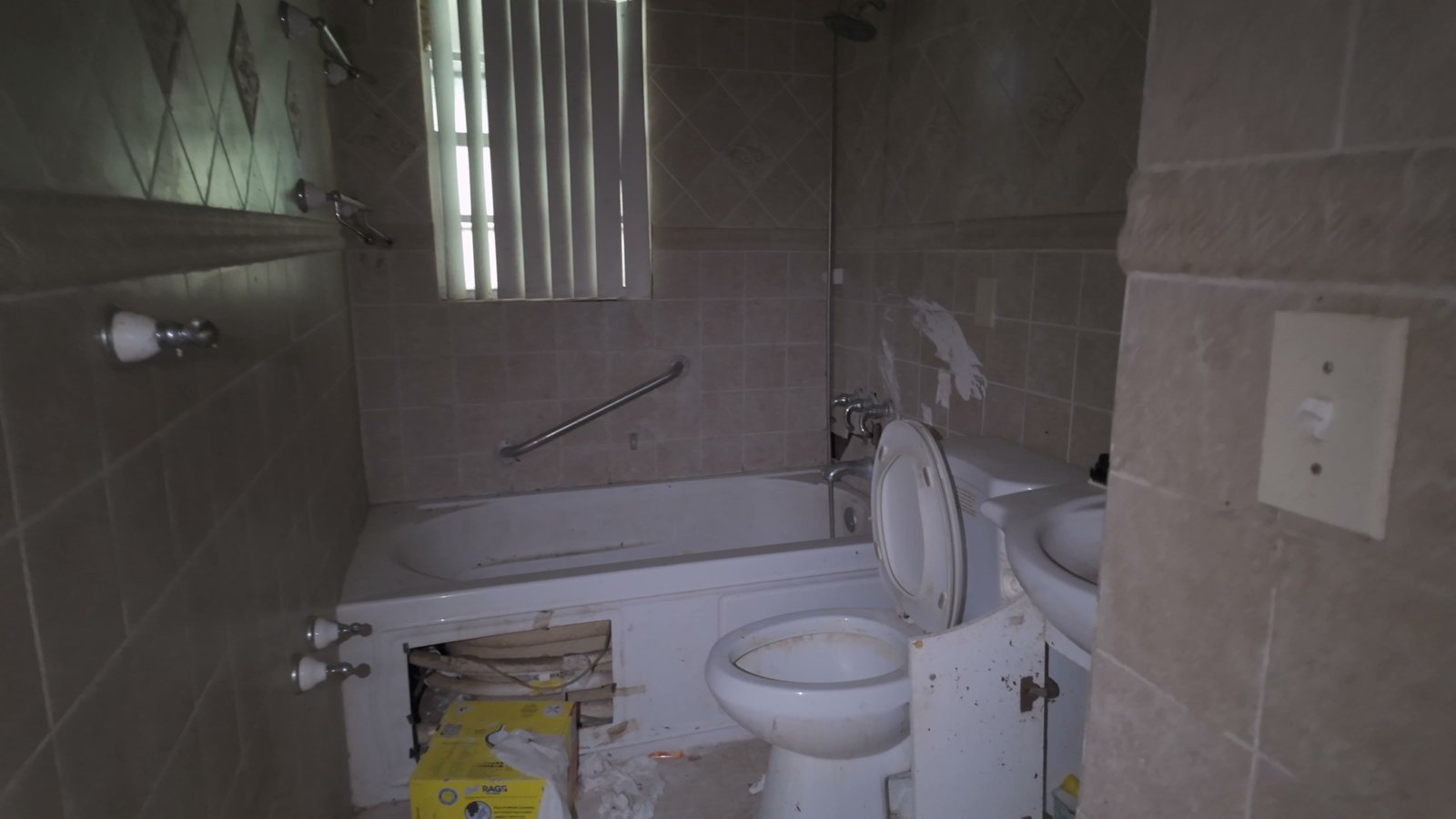
Interior walkthrough of the main living area. Rather than structural hoarder trash, the home had been aggressively searched and ransacked following the owner passing.
When an elderly homeowner passes away and a property sits vacant for months during Florida probate, opportunists frequently take advantage: - Dresser drawers had been pulled out and dumped upside down onto mattresses. - Closet shelving had been swept clean, with clothing and boxes torn apart across the floorboards. - Desk cabinets and file boxes had been emptied, indicating someone had rummaged through the home searching frantically for hidden cash, estate jewelry, precious metals, or uncashed savings bonds.
- Remnants of Loving Care
- Amidst the scattered debris, touching reminders of the mother's final years remained. The front entrance featured a sturdy wheelchair ramp constructed of treated pine. Inside the primary ground-floor bedroom, heavy-duty medical safety grab bars were anchored into the drywall, and an adjustable hospital bed frame stood against the wall. You could see where family members and in-home care nurses had lovingly tended to her daily needs.
It was heartbreaking to see a home that had once represented safety, family dignity, and decades of cherished memories reduced to an unkempt shell littered with dried animal droppings and tossed belongings.
3. The Vinyl Treasure and the Missing Appliances: Why This Wasn't a Hoarder House
As I continued the inspection through the downstairs family room and den, I uncovered a fascinating cultural history that completely disproved the hoarder label.
The former occupants were passionate, dedicated music lovers.
Covering the tables, shelves, and floor of the main living area were thousands of vintage vinyl record albums spanning the 1960s, 1970s, and 1980s: classic Motown, soul, rhythm and blues, gospel, jazz, and rock. Stacks of original pressing LP records sat alongside vintage component stereo receivers, wood-encased amplifiers, turntables, heavy studio monitor speakers, and hundreds of VHS home video tapes. Legendary artists like Aretha Franklin, Marvin Gaye, The Temptations, Stevie Wonder, and Shirley Caesar filled the crates.
In another reception room stood an upright piano. You could instantly picture lively holiday gatherings filled with acoustic music, singing, and family celebrations.
Stacks of vintage vinyl LP records, audio component systems, and music memorabilia scattered across the living quarters, showing decades of musical passion now damaged by humidity.
Unfortunately, because the central air conditioning had been disconnected for over two years, the relentless Northeast Florida humidity had exacted a severe toll: - High indoor relative humidity (frequently exceeding 80% in unconditioned Jacksonville summers) caused the cardboard record album jackets to swell, mildew, and fuse together. - The piano soundboard had suffered moisture warping, and acoustic speaker cones were deteriorating from dampness. - In Florida probate administration, personal property of sentimental or historical value must often be inventoried under Florida Statute Section 733.604, but physical decay during prolonged vacancies destroys that intrinsic value before heirs can salvage it.
When I entered the kitchen, another common symptom of vacant property decay was apparent: appliance theft. - While the older refrigerator had been left behind, the freestanding electric range stove and the built-in dishwasher were gone. - Intruders had disconnected the appliances, leaving bare copper electrical wires and uncapped supply valves exposed behind the cabinetry. - When properties remain unoccupied during probate, opportunistic thieves routinely target functional kitchen appliances, copper plumbing lines, and exterior condenser units to sell on secondary online classifieds.
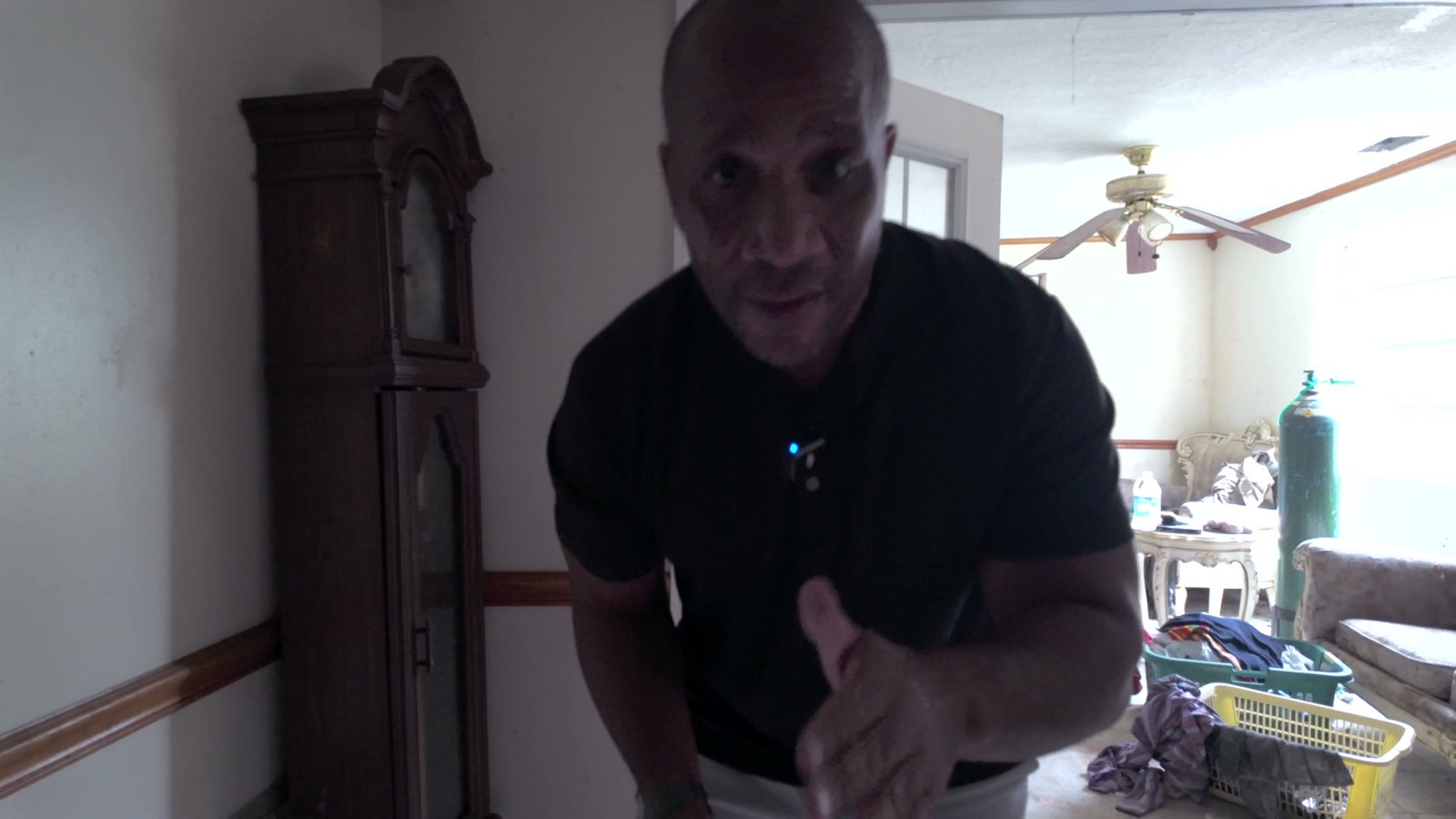
5. The Backyard Code Violation Notice: City of Jacksonville Municipal Code Chapter 518
Walking back downstairs and stepping out onto the rear concrete patio, the full extent of exterior neglect became undeniable.
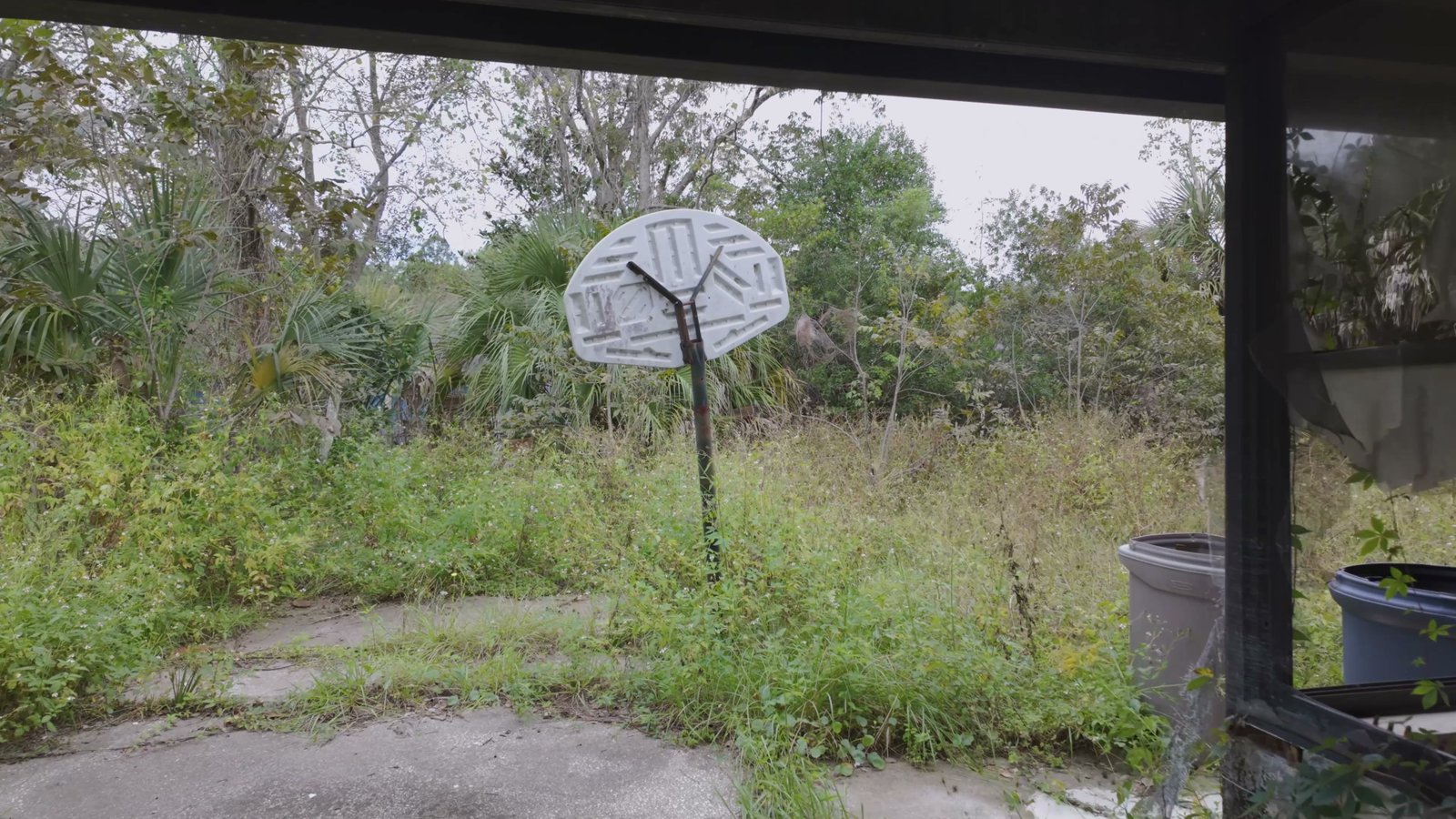
The backyard was heavily overgrown with waist-high weeds, wild blackberry brambles, fallen oak limbs, and discarded household items. It was easy to see how the seller had stepped on a rusty nail during her previous visit.
Then I noticed an official piece of paper taped securely to the exterior back door: an official Notice of Violation issued by the City of Jacksonville Municipal Code Compliance Division.
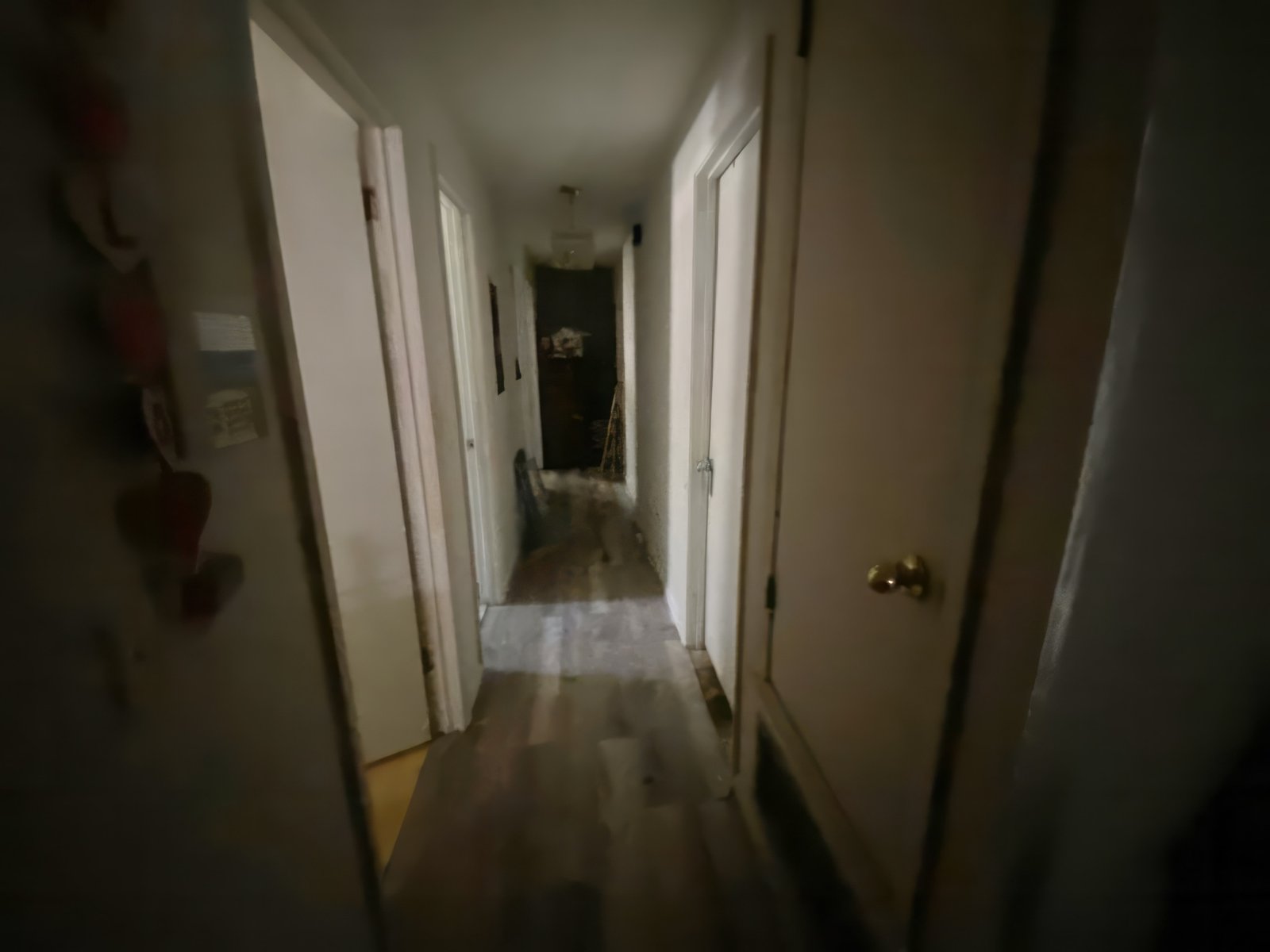
Municipal code compliance officers routinely cite vacant probate properties for excessive vegetation, nuisance debris, and unsecured structures under Jacksonville Municipal Code Chapter 518.
- Understanding Jacksonville Municipal Code Chapter 518
- Under the Jacksonville Property Safety and Maintenance Code (Jacksonville Municipal Code Chapter 518):
- Section 518.402 prohibits property owners from permitting grass, weeds, and wild undergrowth to exceed twelve inches in height.
- Section 518.405 bans the open accumulation of salvage materials, scrap metal, decayed furniture, and loose building materials on residential lots.
- Section 518.205 requires all vacant structures to remain locked, boarded, and securely protected against unauthorized entry and animal intrusion.
- The Referred to Contracting Threat
- The notice posted on the door contained specific language indicating that the violation had been referred to contracting.
When a property owner fails to correct an overgrown yard or nuisance violation within the statutory fifteen-day compliance window, the City of Jacksonville dispatches private abatement contractors: - The private contractor mows the property, removes fallen limbs, and cleans debris. - The city bills the property owner a standard administrative fine plus the private contractor fee, often totaling $500 to $1,500 per cut. - If unpaid, the case proceeds before the Special Magistrate at the Ed Ball Building in downtown Jacksonville (214 North Hogan Street). The Special Magistrate issues an administrative order imposing daily accruing fines until the property is brought into full compliance. - Under Florida Statute Section 162.09, municipal code enforcement liens constitute super-priority liens that attach directly to the real estate. They cannot be eliminated by standard probate distributions or mortgage modifications. They must be formally cured, inspected by a city code officer, and paid or mitigated through the Special Magistrate before clear marketable title can pass to a new owner.
6. The Grim Statistics: Why 67% of Americans Die Without a Plan
The tragic scenario unfolding at this Northside Jacksonville property is not an isolated occurrence. It reflects a nationwide estate planning crisis that places catastrophic emotional and financial burdens on grieving families.
- Estate Planning Deficits Across the United States
- According to national survey data compiled by Caring.com, the American Bar Association, and Gallup:
- 67% of American Adults Lack an Estate Plan: More than two out of three American adults do not have a will, living trust, or basic power of attorney in place.
- 40% Believe They Do Not Have Enough Assets: The leading reason people fail to establish an estate plan is the misconception that only wealthy families need one. In reality, anyone who owns a titled asset, such as a single-family house in Florida, needs an estate strategy.
- 33% Delay Due to Procrastination or Uncomfortable Conversations: Contemplating mortality and discussing inheritance choices creates emotional friction, leading families to postpone planning until unexpected health emergencies arise.
- What Happens When a Florida Property Owner Dies Intestate?
- When an individual passes away in Florida without an executed last will and testament, the estate is classified as intestate:
- Florida Intestate Succession Laws (Florida Statute Sections 732.101 through 732.109) dictate exactly which surviving relatives receive title to real estate, regardless of the decedent verbal intentions.
- If there is a surviving spouse and no descendants outside that marriage, the spouse inherits 100%. If there are descendants from another relationship, the surviving spouse inherits one-half, and the descendants share the remaining half equally.
- If there is no surviving spouse, the property passes equally to surviving children. When siblings, half-siblings, or estranged relatives disagree on whether to keep, repair, or sell the property, the estate can stall indefinitely in probate litigation.
- Without designated legal ownership, every living heir must be located, served formal court notice, and agree to join in any subsequent listing or sale, creating massive family gridlock.
7. Why Florida Probate Takes So Long: The 6 to 18 Month Bureaucracy
The daughter who called me was stunned that it took two full years to obtain clear title to her mother's home.
Many heirs mistakenly assume that probate is a routine paperwork filing that takes two or three weeks. In the State of Florida, formal probate administration is a rigid judicial procedure governed by Chapters 731 through 735 of the Florida Statutes.
- Mandatory Attorney Representation
- Under Florida Probate Rule 5.030, an individual cannot represent an estate pro se unless they are the sole interested beneficiary. In virtually all cases involving outside creditors or multiple beneficiaries, hiring a licensed Florida probate attorney is required. Retaining an attorney requires upfront retainers averaging $3,500 to $7,500, or a statutory fee tied to the value of estate assets under Florida Statute Section 733.6171.
- Summary Administration vs. Formal Administration
- Florida recognizes two main types of probate administration:
- Summary Administration (Florida Statute Section 735.201): Available only if the total value of non-exempt Florida estate assets does not exceed $75,000, or if the decedent has been deceased for more than two years. It is faster, but cannot be utilized if creditors are contesting claims or if ongoing estate business must be managed.
- Formal Administration (Florida Statute Chapter 733): Required for all larger estates, whenever a personal representative must be formally appointed to manage real estate, or when significant creditor claims exist. This was the long, arduous process required for this Northside estate.
- The Formal Court Appointment Process
- The probate timeline begins when the personal representative petitions the Circuit Court in the county where the decedent resided:
- Petition and Oath: The petitioner must file death certificates, original wills, and statutory oaths.
- Letters of Administration: The probate judge must review and sign formal Letters of Administration and Orders Appointing Personal Representative before anyone possesses legal authority to access accounts, manage real estate, or negotiate with buyers. In busy judicial circuits like Duval County's Fourth Judicial Circuit, obtaining Letters of Administration frequently takes six to ten weeks.
- The Mandatory Creditor Claim Window
- Under Florida Statute Section 733.702, the personal representative must publish a formal Notice to Creditors in a local newspaper of general circulation once a week for two consecutive weeks:
- 90-Day Statute of Repose: Creditors have three full months (90 days) from the first publication date to file written claims against the estate.
- The personal representative cannot safely distribute real estate assets or disburse sale proceeds until this three-month window closes and all filed claims are resolved.
- The True Carrying Costs of a Vacant Estate
- While court proceedings crawl forward over 12 to 24 months, holding costs continue to pile up:
- Property Taxes: Duval County ad valorem taxes accrue each November.
- Vacant Homeowners Insurance: Standard policies cancel after thirty days of vacancy. Specialized vacant home insurance policies carry premiums two to three times higher.
- Utility Expenses: Even basic electric and water service to prevent mold run $100 to $200 monthly.
- Lawn Care and Code Enforcement: Failing to mow results in city citations and contracting liens.
By the time the deed transfers, thousands of dollars in carrying costs have eroded the estate equity.
8. How to Prevent a Long Florida Probate: 4 Actionable Estate Planning Tools
The most effective way to protect your family from the delays and expenses of Florida probate is to implement proper legal structures during your lifetime.
Here are four established legal mechanisms Florida property owners can use to ensure real estate transfers instantly upon death without ever stepping foot inside a probate courtroom:
- The Florida Lady Bird Deed (Enhanced Life Estate Deed)
- The Lady Bird Deed is one of the most cost-effective estate planning instruments available under Florida common law and Florida Statute Section 689.02:
- How It Works: The owner executes and records a deed conveying remainder title to chosen beneficiaries upon death, while explicitly reserving a life estate coupled with full power to sell, mortgage, gift, or revoke the property without beneficiary consent.
- Instant Transfer: Upon death, full fee-simple title transfers automatically to remainder beneficiaries by operation of law. Heirs simply record a certified death certificate in county public records. Under Florida Bar Uniform Title Standard 6.8, title examiners verify that the grantor did not exercise their reserved power to convey during life, and title passes cleanly.
- Tax and Medicaid Advantages: The deed preserves 100% of Florida homestead tax exemptions (Save Our Homes caps under Florida Statute Section 193.155), avoids federal gift taxes, provides a stepped-up tax basis under IRC Section 1014, and does not violate Medicaid five-year look-back rules.
- A Revocable Living Trust
- For families with multiple properties or minor beneficiaries, a Revocable Living Trust provides comprehensive private asset management:
- How It Works: You execute a written trust agreement naming yourself as trustee and designating a successor trustee. You then deed the real estate from your individual name into the trust.
- Zero Court Involvement: A trust does not die. Upon passing, the successor trustee takes immediate control according to trust terms, with authority to sell the property as-is and disburse proceeds within days.
- Total Privacy: Unlike probate filings, which become public records on county court dockets, trust documents remain entirely private.
- Joint Tenancy with Right of Survivorship (JTWROS)
- When two or more individuals co-own Florida real estate as Joint Tenants with Right of Survivorship:
- Under Florida Statute Section 689.15, when one joint tenant passes away, their interest vests automatically in surviving joint tenants by operation of law.
- Probate is completely avoided; the surviving owner merely records a certified death certificate and survivorship affidavit.
- Beneficiary and Transfer-on-Death Designations for Financial Accounts
- While Florida does not currently authorize Transfer on Death deeds for real estate, you can designate Payable on Death (POD) or Transfer on Death beneficiaries on bank accounts, brokerage portfolios, and life insurance policies:
- Direct Liquid Access: Naming beneficiaries ensures heirs receive immediate cash to cover funeral costs, maintain real estate expenses, and prevent financial distress.
This information is provided for educational purposes and is not legal, tax, or financial advice. Always consult a qualified Florida estate planning attorney to draft deeds and trusts tailored to your family goals.
9. Northside Jacksonville Real Estate Market Context: Comps, Oversized Homes, and Cash Liquidity
Understanding real estate values on the Northside of Jacksonville requires an appreciation of neighborhood micro-markets and buyer demographics.
- Current Northside Jacksonville Housing Metrics
- According to market reporting from the Northeast Florida Association of Realtors (NEFAR) and Duval County Property Appraiser transaction records:
- Median Single-Family Sales Price: Approximately $275,000 to $295,000 for standard move-in ready homes across Northside zip codes (such as 32218, 32208, and 32209).
- Established Sub-Markets: Communities like Lake Forest, Moncrief, Ribault, and Highlands feature predominantly mid-century construction where square footage averages 1,400 to 1,700 square feet.
- Average Days on Market: Turnkey, renovated properties average between 45 and 60 days from listing to contract.
- Supply Levels: Housing inventory sits around 3.8 to 4.2 months of supply.
- The Challenge of Selling an Oversized Distressed Property
- When evaluating this five-bedroom, four-bathroom multi-story home, several market realities apply:
- Comps are Modest: Surrounding homes are primarily 1,400 to 1,700 square foot single-story ranches trading for $240,000 to $280,000 in updated condition.
- Traditional Financing Fails: Conventional and FHA mortgage lenders require functional kitchen appliances, an active roof with at least 3 to 5 years of certified remaining life, and zero unaddressed safety hazards. A home with stolen appliances, ceiling leaks, and a rotting balcony cannot qualify for standard retail financing.
- Cash Buyers Provide the Only Realistic Exit: Without $100,000 or more in liquid cash for upfront renovations, an inherited property in this condition must be sold to an experienced cash home buyer capable of closing with private capital and assuming all municipal violations.
10. Detailed Rehabilitation Scope and Contractor Budget for a 5-Bed, 4-Bath Home
To understand why an as-is cash offer differs from retail after-repair value, let's examine the detailed contractor scope of work required to restore this Northside property to marketable condition.
| Scope Category | Description of Work Required | Estimated Contractor Cost |
|---|---|---|
| Trash-Out & Biohazard Clean | Hauling out abandoned belongings, vinyl records, furniture, flea extermination | $6,000 - $8,500 |
| Roof Replacement & Decking | Complete tear-off of 3,200 sq ft roof, replacing rotted plywood decking | $14,000 - $18,500 |
| Drywall Repair & Texture | Stripping water-damaged ceiling drywall, re-taping joints, knockdown finish | $7,500 - $11,000 |
| Exterior Siding & Balcony | Demolishing rotted second-story balcony deck, repairing wood siding and fascia | $9,000 - $13,500 |
| Kitchen 1 (Main Level) | Installing new shaker cabinets, quartz countertops, new appliances, plumbing | $15,000 - $22,000 |
| Kitchen 2 (Upstairs Suite) | Updating second-floor kitchenette, new sink, cabinetry, and electrical rough-ins | $7,000 - $10,500 |
| 4 Bathroom Renovations | Full gut remodel of 4 full bathrooms: tile, vanities, plumbing fixtures, toilets | $24,000 - $34,000 |
| HVAC System Replacement | Installing 2 complete heat pump systems (dual-zone upstairs and downstairs) | $16,000 - $22,000 |
| Electrical & Plumbing Updates | Rewiring stolen appliance circuits, upgrading electrical panel, supply lines | $8,500 - $12,500 |
| Flooring (3,000 sq ft) | Luxury vinyl plank (LVP) throughout living areas, tile in wet areas | $13,500 - $18,000 |
| Interior & Exterior Paint | Full interior primer/paint, exterior pressure wash, brick sealant, trim paint | $9,500 - $13,000 |
| Landscaping & Code Cure | Bushhogging overgrown rear yard, clearing blackberry brambles, curing city lien | $4,500 - $6,500 |
| Total Estimated Rehab | Turnkey Contractor Scope of Work for 5-Bed / 4-Bath Renovation | $135,000 - $186,000 |
When heirs look at a home, they often see cosmetic repairs. But experienced general contractors see mechanical systems, structural framing, building codes, and municipal permitting. Undertaking a $150,000 rehab requires substantial capital, full-time oversight, and months of carrying risk.
11. DIY Estate Renovation vs. Selling As-Is for Cash: The Financial Breakdown
Heirs faced with an inherited distressed property frequently wonder whether they should hire contractors and renovate the home themselves or sell the property as-is for cash.
Let's compare the financial realities of both strategies for this Northside Jacksonville property:
| Financial Factor | Strategy A: DIY Contractor Renovation | Strategy B: Direct As-Is Cash Sale |
|---|---|---|
| Upfront Capital Required | $135,000 to $186,000 out of pocket | $0 out of pocket |
| Time to Complete & Sell | 6 to 9 months of construction and listing | 14 to 21 days to complete closing |
| Holding Costs (Taxes, Ins, Power) | $6,000 to $9,000 during renovation | Paid and prorated at closing |
| Realtor Commissions (5-6%) | $18,000 to $22,000 on retail resale | $0 (No commissions or broker fees) |
| Closing Costs & Title Fees | $4,500 to $7,000 on retail resale | 100% paid by the cash buyer |
| Municipal Code Violations | Heir must pay fines and cure violations | Buyer assumes and cures all violations |
| Trash-Out & Personal Items | Heir must sort and dispose of items | Leave behind any unwanted belongings |
| Performance Risk & Cost Overruns | Heir bears 100% of budget overruns | Zero risk; guaranteed net cash at closing |
For heirs with substantial liquid cash, renovation experience, and the time to manage general contractors, renovating can capture additional retail equity. But for out-of-town owners, busy professionals, or families who simply want closure, an as-is cash sale provides immediate certainty without spending a dime.
12. Frequently Asked Questions About Inherited and Probate Homes in Florida
Here are direct answers to common questions Florida heirs ask when dealing with inherited or probate real estate:
- Can I sell an inherited house in Florida while probate is still open?
- Yes. Under Florida Statute Section 733.613, a personal representative can enter into a purchase contract to sell real property during probate administration. If the decedent will grants the personal representative a broad power of sale, the transaction can often close without specific court approval. If the property passed intestate without a will, the personal representative attorney must file a Petition for Order Authorizing Sale of Real Property, and the probate judge will issue an order approving the sale.
- Who is responsible for paying property taxes on a vacant probate house?
- The estate of the deceased individual is legally responsible for real estate property taxes. The personal representative should pay taxes from estate liquid funds. If the estate lacks liquid cash, heirs can pay taxes out of pocket to protect the property from tax certificate auctions, or the taxes will be settled directly from sale proceeds at title closing.
- What happens if city code enforcement places a lien on an inherited home?
- Municipal code enforcement liens recorded under Florida Statute Chapter 162 attach directly to the real property title. They cannot be eliminated by probate orders. To sell or transfer title, the lien must be resolved by curing the underlying violation and applying to the municipal Special Magistrate for an administrative fine reduction. Experienced cash home buyers routinely purchase properties with active code liens and handle the mitigation process directly.
- Do I have to clear out personal belongings before selling to a cash buyer?
- No. When you sell directly to We Buy Any House In Florida, you are encouraged to take any family heirlooms, photo albums, and personal treasures you want, and leave everything else behind. We handle the entire trash-out, haul-away, and donation process at no cost to you.
- How quickly can a cash sale close on a Florida probate property?
- Once Letters of Administration or an Order of Summary Administration is signed by the court, an as-is cash sale can close in as little as 10 to 14 business days through an established local title company.
If you have inherited a distressed or vacant home in Northeast Florida and want to explore your options without repairs, cleaning, or agent commissions, call We Buy Any House In Florida today at (904) 606-9163 or visit https://www.webuyanyhouseinflorida.com/get-a-cash-offer-today/ for a fair, no-obligation cash offer.
Inherited a Distressed Florida House?
Skip the cleanout, ignore the repairs, and avoid months of probate stress. We buy properties in as-is condition across Northeast Florida with zero commissions or fees.
Get Your Free Cash Offer Today